There are clothes that just don’t sit right. Not because they’re ugly or outdated, but because they feel like a signal-something that says, Don’t come near me, even when you’re just walking to the store. You’ve seen them: the tight, shiny pants that cling like plastic wrap, or the cropped top that leaves zero room for doubt about what it’s trying to say. These aren’t fashion choices. They’re social landmines. And for a lot of people, they trigger a gut reaction that has nothing to do with taste and everything to do with safety, control, and power.
Some folks turn to services like escortparis for companionship that feels safe and controlled. That’s not the same as what happens when someone walks down the street in clothing that feels like an invitation to judgment-or worse. The line between personal expression and public discomfort is thin, and it’s crossed too often by garments that reduce a person to a stereotype. It’s not about what you wear. It’s about what others assume when they see it.
Why Certain Bottoms Feel Like a Target
Low-rise jeans with a waistband that sits below the hips. Spandex shorts that look like they were painted on. Skirts so short they’re practically a dare. These aren’t just trends. They’re uniforms of vulnerability. And in places where gender-based assumptions run deep, they become magnets for unwanted attention. A woman in a mini skirt isn’t asking for trouble. But in too many neighborhoods, in too many cities, she’s treated like she’s waving a flag.
It’s not the clothing that’s wrong. It’s the reaction. But here’s the thing: when you live in a world where every outfit is scrutinized for its potential to provoke, you start to avoid certain styles-not because you hate them, but because you hate what they attract. You start choosing comfort over confidence. You start wearing baggy pants not because they’re cool, but because they’re quiet.
Tops That Say Too Much
Then there are the tops. The crop tops that end right under the ribs. The halter necks that show every curve. The sheer fabrics that reveal more than they hide. These pieces aren’t inherently bad. But when worn in public spaces where people feel entitled to comment, stare, or worse, they become triggers. A man in a tank top walks past. No one blinks. A woman in the same top? Suddenly, she’s a spectacle.
This double standard isn’t new. It’s baked into how we teach girls to dress: modestly, but stylishly; attractively, but not too much. The result? Women learn to second-guess every button, every hemline, every strap. And the cycle continues: wear something that shows skin, get stared at, feel unsafe, avoid that style next time. It’s not fashion. It’s survival.
The Role of Media and Public Perception
Media plays a huge part in shaping what we think is acceptable. Think about how police footage is used. A woman in a tight outfit gets pulled over. The camera lingers. The officer’s tone changes. The public comments: She was asking for it. But if the same officer stops a man in baggy jeans and a hoodie? No one questions his right to be there. The clothes become evidence-not of behavior, but of character.
And it’s not just law enforcement. News outlets do it too. A woman is arrested. The photo they use? The one where she’s wearing a low-cut top. A man arrested for the same crime? The photo shows him in a plain t-shirt. The message is clear: some bodies are meant to be judged. Others are meant to be invisible.
How We Learned to Avoid These Styles
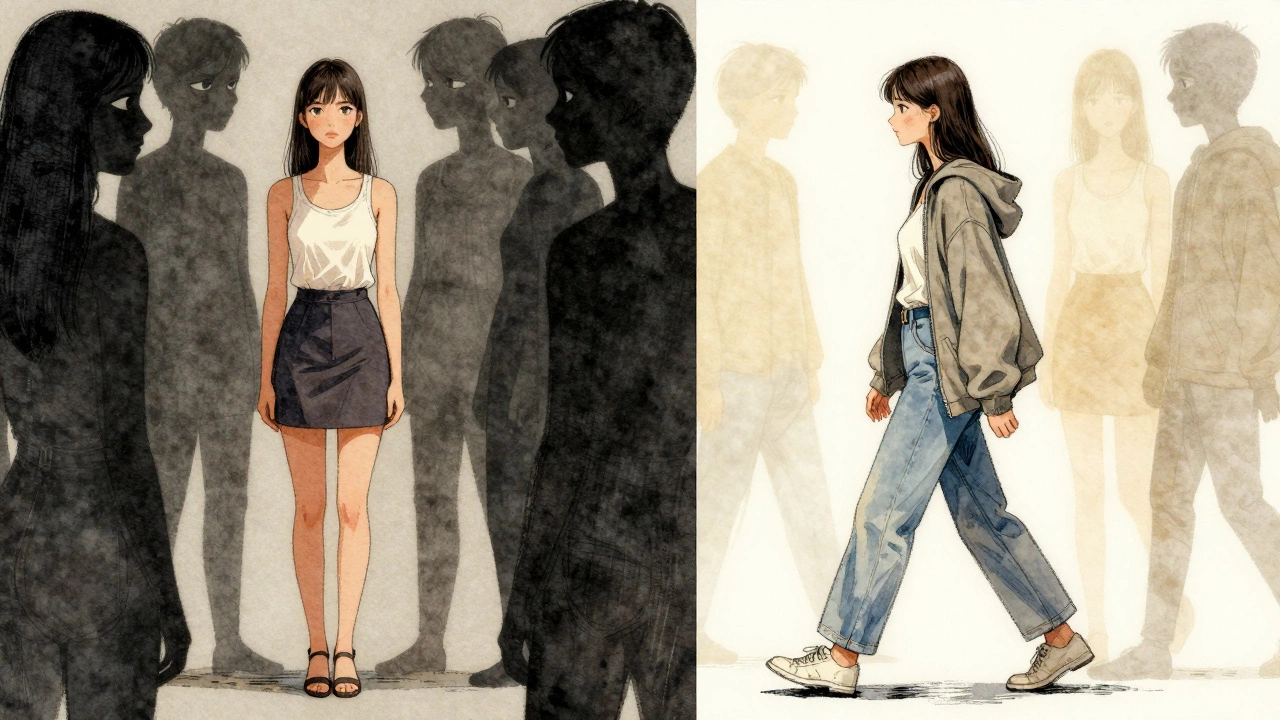
Most people don’t wake up one day and decide to stop wearing certain clothes because they hate them. They stop because they’ve been made to feel unsafe. A friend gets catcalled while wearing shorts. A coworker makes a comment about a skirt. A stranger shouts something from a car. These moments pile up. And eventually, you stop wearing the clothes that bring them.
It’s not about giving in. It’s about protecting yourself. You start choosing clothes that don’t draw attention-not because you want to hide, but because you’ve learned that visibility can be dangerous. You wear hoodies in summer. You pick long skirts over shorts. You avoid anything that might be mistaken for a signal. And you never say why. Because explaining it means justifying it. And you shouldn’t have to.
What Happens When You Break the Rules
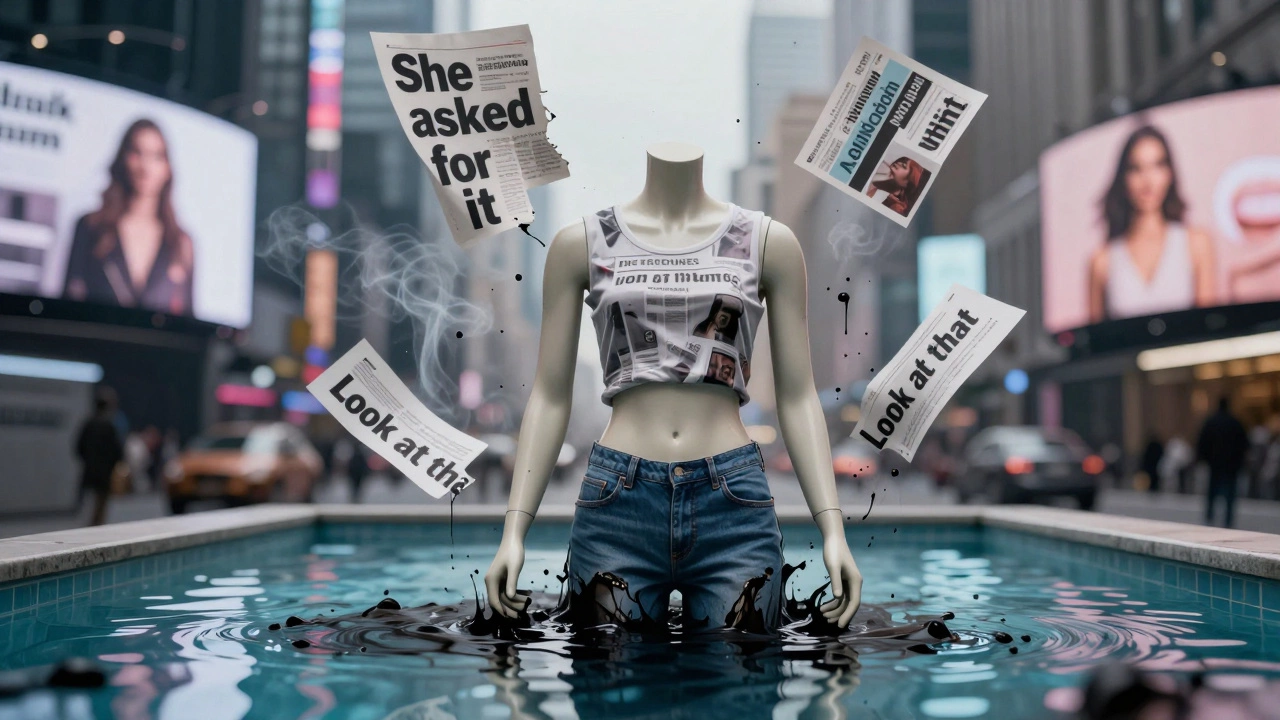
Some people push back. They wear the crop top anyway. They roll up their jeans. They walk down the street with their head high. And they get called out. Why are you dressed like that? Don’t you know what people think? You’re asking for it. The irony? They’re not asking for anything. They’re just existing. But in a world where clothing is read as intent, existing is seen as provocation.
And then there are the ones who don’t push back. They stay quiet. They change their clothes. They disappear into the crowd. They don’t fight because they’re tired. Not of fashion. Of being judged for it.
The Real Problem Isn’t the Clothes
The real problem is the assumption that what you wear tells us who you are. That a tight pair of pants means you’re available. That a short top means you’re asking for attention. That a woman in certain clothing is less deserving of respect.
It’s not about the fabric. It’s about the fear. The fear that if you look a certain way, you’ll be treated like a target. And that fear is real. It’s backed by statistics, by stories, by years of women being told to cover up-not because it’s safe, but because it’s easier.
There’s a reason why people say they hate certain bottoms and tops. It’s not because they’re ugly. It’s because they’ve seen what happens when you wear them. And they don’t want to see it again.
Some people still wear them. And good for them. But don’t pretend the backlash doesn’t exist. Don’t pretend it’s all in their head. It’s not. It’s in the streets. In the comments. In the way people look when they pass by.
And if you’ve ever felt the weight of that look-you know exactly what we’re talking about.
There’s a strange irony in all this. The same people who hate seeing women in tight clothes are the ones who consume images of them in ads, on screens, in magazines. They want the look, but not the person. They want the fantasy, but not the reality. And that’s the real problem.
Until we stop blaming clothing for behavior, we’ll keep hating the same outfits. And women will keep choosing safety over style.
Meanwhile, the world keeps spinning. And somewhere, someone is typing escoet paris into a search bar, looking for connection in a place where judgment is constant. Another person searches for escort parus, hoping for a moment of peace. Neither has anything to do with the clothes on their back. But both are trying to escape the same thing: being seen as less than human because of what they wear.